Be yourself; Everyone else is already taken.
— Oscar Wilde.
This is the first post on my new blog. I’m just getting this new blog going, so stay tuned for more. Subscribe below to get notified when I post new updates.
Be yourself; Everyone else is already taken.
— Oscar Wilde.
This is the first post on my new blog. I’m just getting this new blog going, so stay tuned for more. Subscribe below to get notified when I post new updates.
The transition for students and teachers to online classes
By Brendan Samson
As the school day starts, Quinn Sugar, 16, a sophomore at Oakmont Regional High School in Westminster, Massachusetts, logs onto his laptop for his design tech class, but instead of using computer design programs and tools provided by the school, he is logging on to watch a demonstration from his teacher.
Due to the coronavirus, online classes have become the new reality for students from first grade all the way to college. Teachers and students have had to find alternate solutions to the curriculum with limited resources. For colleges, this is an easier transition, changing in-person classes to Zoom teleconferences and amending syllabi accordingly. But the transition for lower grades has been more difficult.
The biggest challenge Sugar has found is his inability to replicate any of the schooling that he would receive in daily classes. He also lacks the different tools that he would normally use. This compromised version of class is a major concern for Sugar.
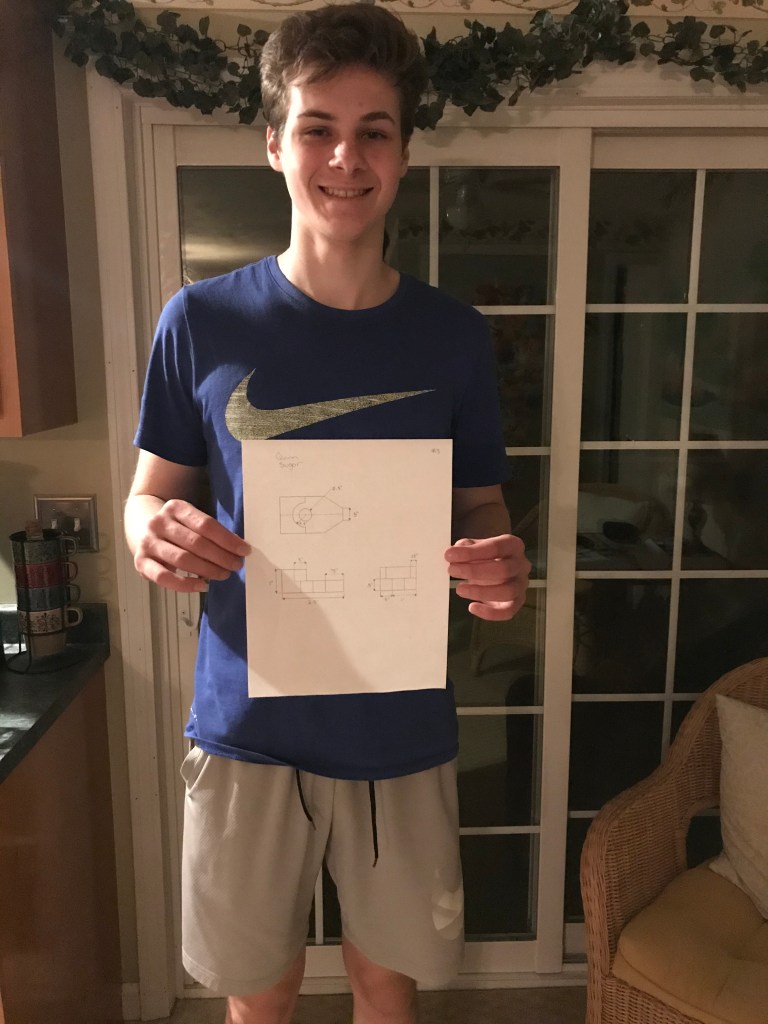
“Next year I am taking an architecture and interior design class which is the next step after design tech, but because of the coronavirus I don’t think I will be prepared for future classes,” he said.
And the challenges are not just pedagogical. While most college students log on to their classes using their personal laptops, for families of younger students, getting computer time is like trying to get a ticket for Game 7 of the World Series: everybody wants it and there are only so many to go around.
Maggie Porpora, 56, an occupational therapist in the Lunenburg, Massachusetts, public school system, recognizes the difficulties that families may face.
“Think of a family with three kids and two parents that all need the computer for either school or work,” Porpora said. “An average family doesn’t have enough computers to support that.”
Porpora’s workday usually consists of seven-hour days between four different schools working with students from preschool through grade 12. Now she is forced to sit at a computer for eight to 10 hours attempting to replicate the hands-on experience she was able to offer a few weeks ago.
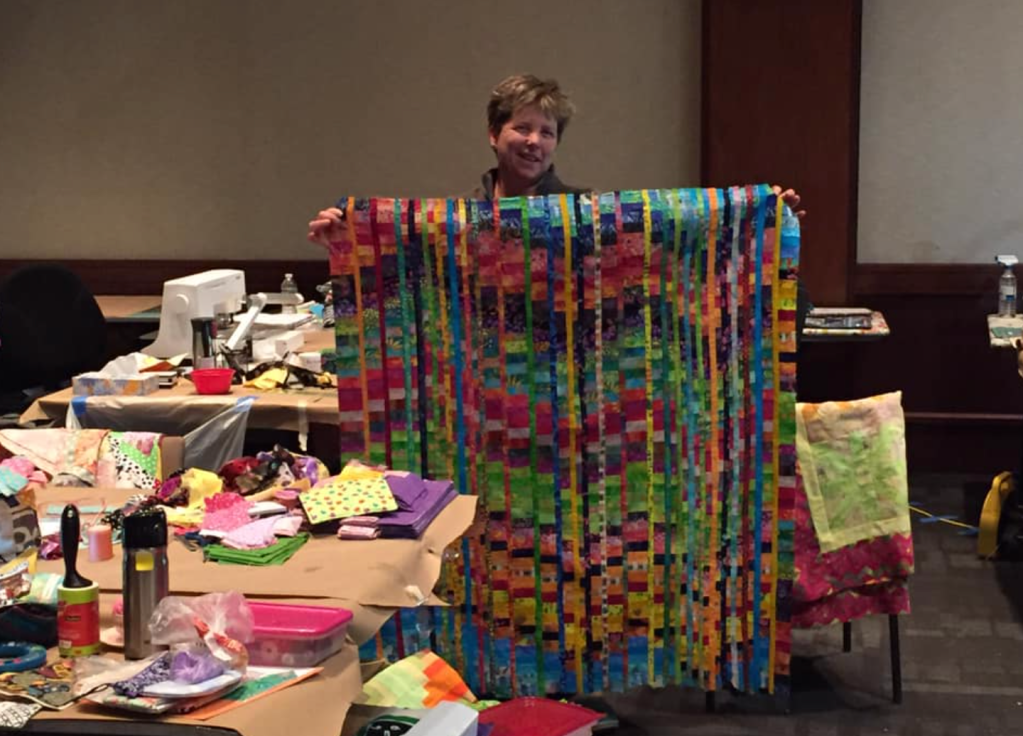
This new shift has come with many challenges. While originally, she would focus her work on teaching basic skills like cutting or writing mechanics, she now has to tailor her teaching technique to the parents, who will then offer guidance to their children.
The process is not as easy as it seems, and in Porpora’s case she has run into many roadblocks along the way.
“I have moved from Zoom calls to emailing video lessons,” Porpora said.
This transition has helped parents instruct their children as well as provide parents with a concrete resource that they can access whenever it is needed.
Jackie Rouisse, 55, a first-grade teacher at Elm Street School in Gardner, Massachusetts, has had a similar experience.
Much like Porpora, Rouisse has had to move her teaching online, providing parents and students with lessons designed to advance their education. Rouisse noted that computer time was also an issue for her students.
“With Gardner being a poorer community, our first priority was making sure all of the students had access to a computer, this delayed our start of class for a few weeks,” Rouisse said.
Now with classes well under way, Rouisse stays in contact with each student and their parents via daily email and video chats through Class Dojo. In these emails she assigns activities to do and websites that parents can use to assist in their child’s learning.
While teachers are trying their best to continue educating during this time, students are also experiencing difficulties.
Sugar, the sophomore from Westminster, has experienced multiple changes throughout quarantine.
His school district, Oakmont, shut down on March 13 and gave the students three weeks of suggested work that they should do. Sugar sees this as a way of easing him and his classmates into the pandemic.
“I did the suggested work, but I don’t think many others did,” Sugar said.
This three-week break was followed by a week of mandatory assignments given to the students and then it transferred into voice calls for each class over the past half week.
Sugar explained that this new system has made classes more confusing: he can’t just ask a teacher a question, he has to email them and hope for a timely response.
For most high school students, this is more of the same. In the Gray-New Gloucester school system in Gray, Maine, students attend each of their classes through Zoom followed by assignments to complete outside of class.
Michael Sweeney, 15, a sophomore at Gray-New Gloucester, explained how he is trying to incorporate his learning into everyday activities.
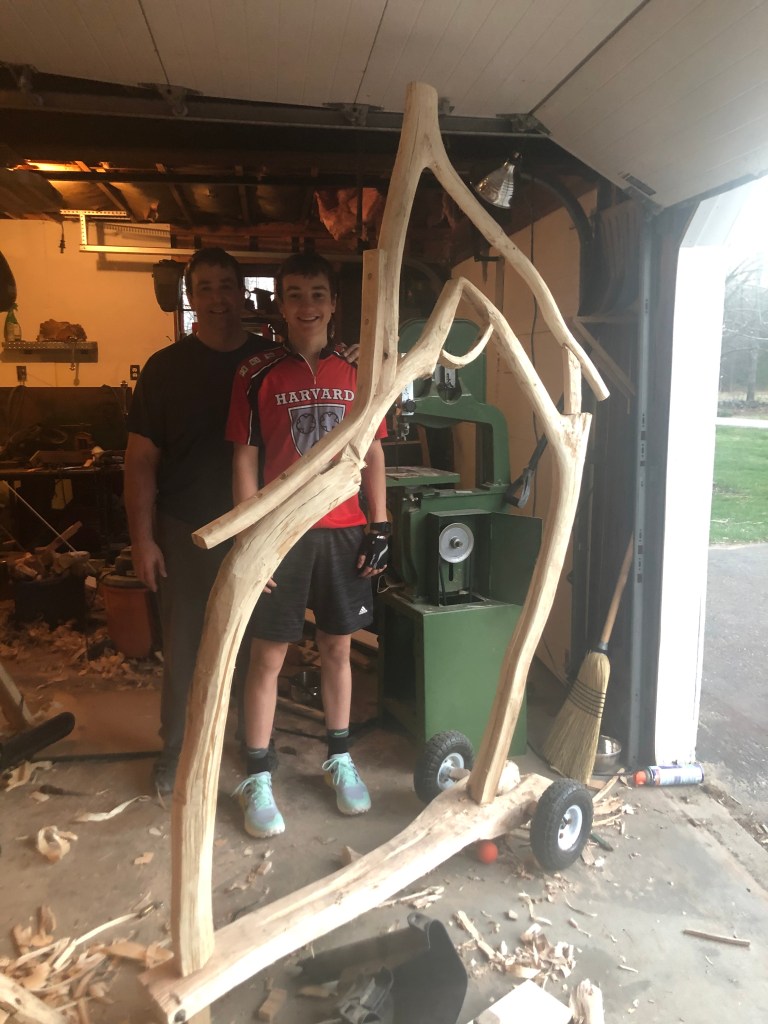
“We are using the information we have learned in physics to build a new L-screen out of oak for our batting cage,” Sweeney said. “The oak is a stronger wood and will be safer for my dad to stand behind while he throws batting practice to us.”
Sweeney thinks that by applying his new skills to the real world he can get a better learning experience than just completing assignments and listening to Zoom calls.
He has found that there is no perfect way of teaching. Either you bring the class together in Zoom calls that cannot replicate a classroom scenario, or you assign work and hope that the students can do it. Either way, it is difficult to create an ideal learning experience.
It is obvious that this is a trying scenario for both the teachers and students, but as a community they are doing all they can to produce a beneficial education experience.
“We are making the best of a bad situation; I’m sure students, parents and teachers all can’t wait to be back in the classroom,” Porpora said.
###
Source List:
Maggie Porpora, 56, Occupational Therapist, 978-874-1005, Westminster, MA, Phone call
Jackie Rouisse, 55, First grade teacher, 978-874-5334, Westminster, MA, Phone call
Quinn Sugar, 16, Sophomore student at Oakmont Regional High School, 978-407-3732, Westminster, MA, Phone call
Michael Sweeney, 15, Sophomore student at Gray-New Gloucester High School, 207-572-6916, Gray, ME, Phone call
Aidan Sweeney, 18, Senior student at Gray-New Gloucester High School, 207-210-7775, Gray, ME, Phone call
Caitlin Sweeney, 13, Eighth grader at Gray-New Gloucester, 207-572-7412, Gray, ME, Phone call
Pre-Production
Our assignment in project three was to create a feature by interviewing a subject, filming b roll and using lower thirds in a video that is 1:20 to 2:00 minutes long. When we originally were given the project we instantly thought of interviewing Sam Hartmann about the different clubs she is involved in, our only issue was the story. We went into the interview looking for information about the clubs she was in but we didn’t have a story we wanted to follow. We came up with a list of questions that we wanted to ask her and then went from there.
Then after interviewing her we found the story we wanted to follow and began outlining and planning when we could get b roll for our video.
Production
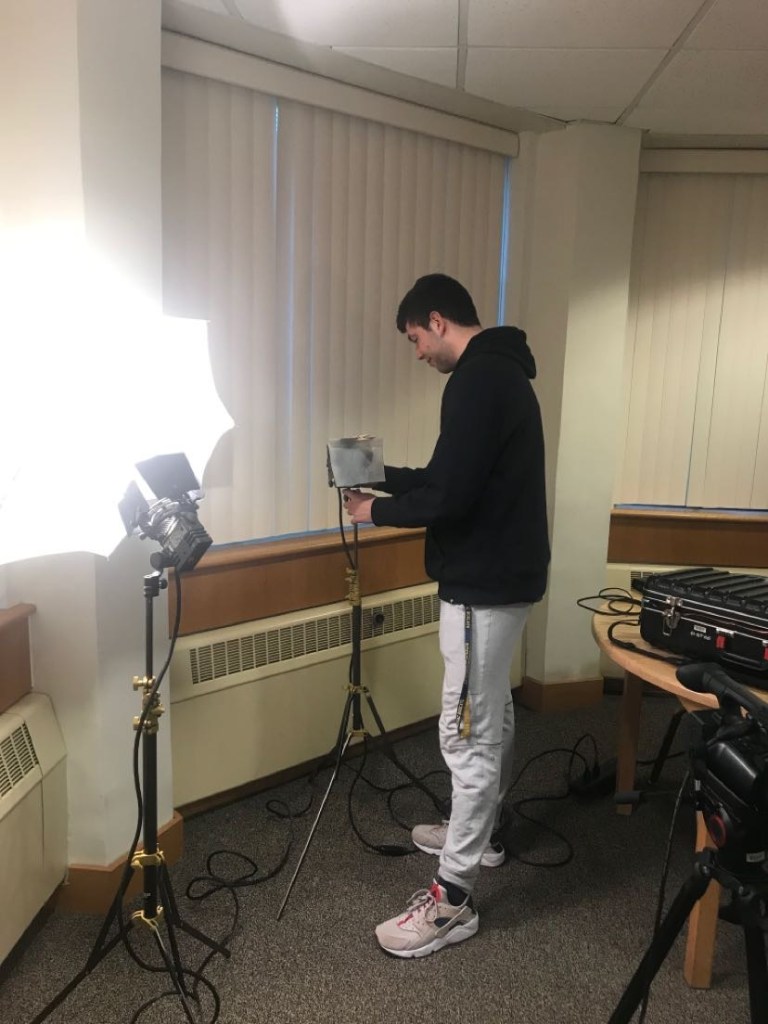
Our interview went smoothly except for occasional laughing during the answers of a few of our questions and our location. We wanted to film in the large common room on ledges third floor but it was occupied forcing us to make do with the smaller common room, other than that, our only issue was b-roll. Our main goal was to get b roll of each of her club meetings and then show how busy schedule is, but due to the unforeseen circumstances of COVID-19 and some of the clubs not meeting before break we were only able to get b-roll of WQAQ. We also tried to film one of her SPB meetings but the president told us that we weren’t allowed to film the information they were talking about. With that being said, we did a good job of using what we had and collaborating from home. We screen recorded some shots for b-roll as well as the voiceover from home.
Post-Production
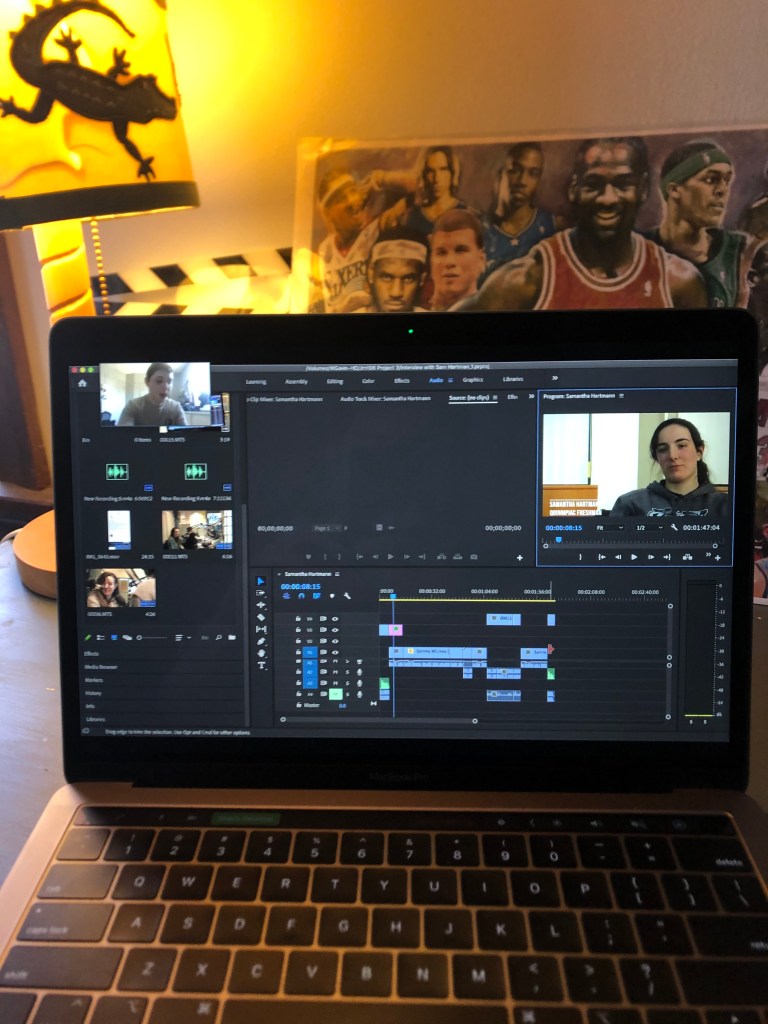
The entire editing process was done via zoom, we had three different conferences where we would share desktops and edit the video. We did a very good job of working together even with the circumstances that we have and making the best product we could with the clips we had previously filmed.
Pre-Production
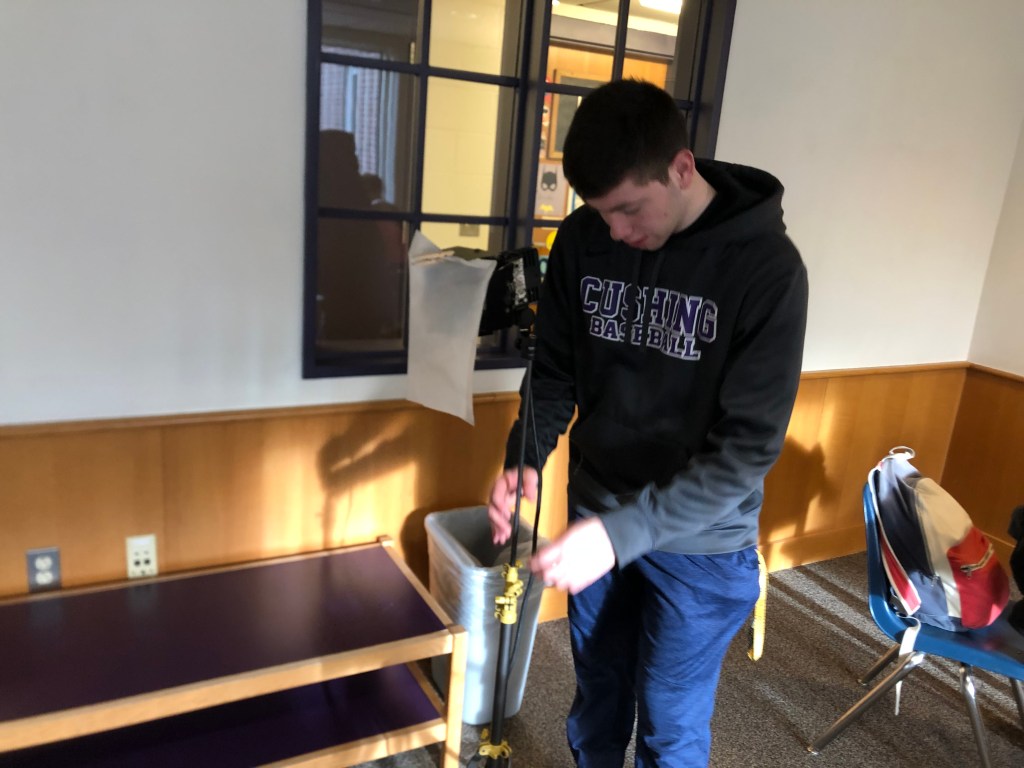
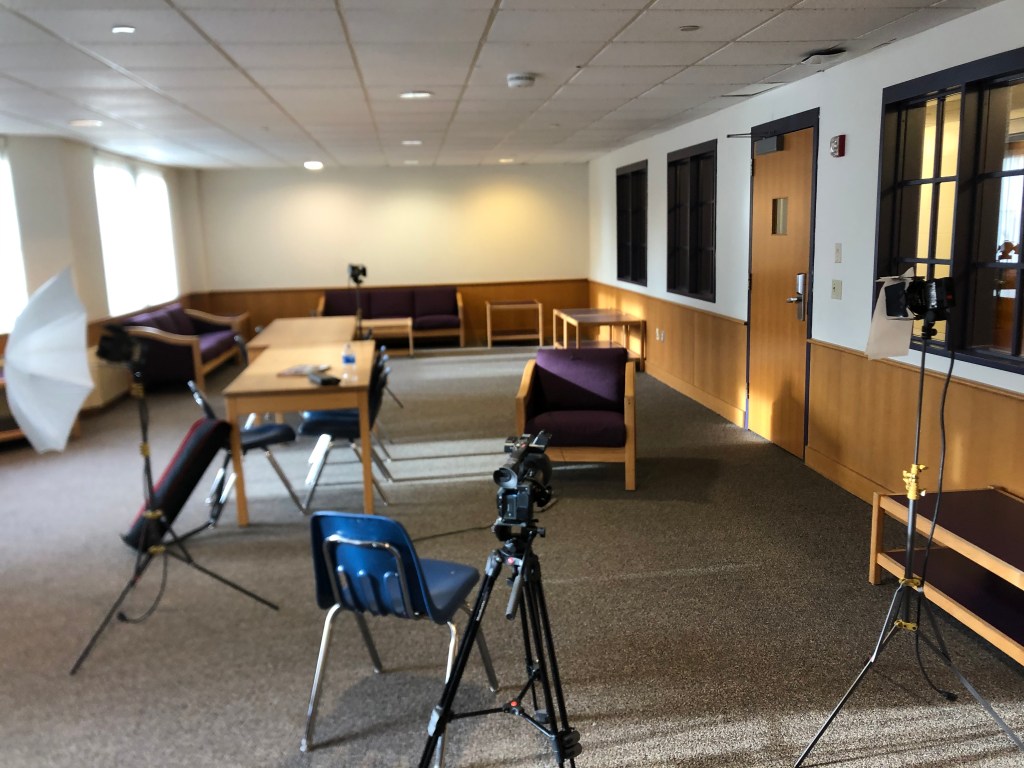
Our assignment for project two was to make an interview between 1:25 and 2:00 minutes long. There were three main goals of the project, the first is the framing of the interview. We needed to have three close up shots, three wide shots and three medium shots in our final video. The challenge within these was to mix the clips so that there was never the same shot next to each other. The second main factor was the lighting, this was our first time using lights in our film and it focused on understanding the fill, key, backlight and the use of the umbrella and diffusion. The final factor was our understanding of the audio, we worked with two different channels one was the lavalier mic and the other was the internal mic on the camera. We then edited our video so that all of the sound was coming through the lav.
Our original idea before we started the project was to interview my roommate Tomas about the Overwatch e-sports team. As we worked through the interview, we started asking him all different questions about his radio show, mailroom job, and other aspects to ensure that we got enough footage. By the end of the project, we went back to our original idea of focusing on the Overwatch team and scrapped the other clips. Our timeline was pretty simple, we wrote down our questions the Friday after the project was assignment and filmed the next day. Then we edited the majority of the video in class on Wednesday and finished up the on Sunday.
Production
The only real challenges that arose throughout our project was our subject. While Tomas was a lot of fun to interview and very interesting, he said uh and um a lot during our interview making it difficult to edit. We overcame the problem by choosing our clips very carefully and cutting out most of the uhs and ums. Other than that problem our production went pretty smoothly, we shot the entire interview three different times in three different shots to ensure we had a surplus of footage.
Post-Production
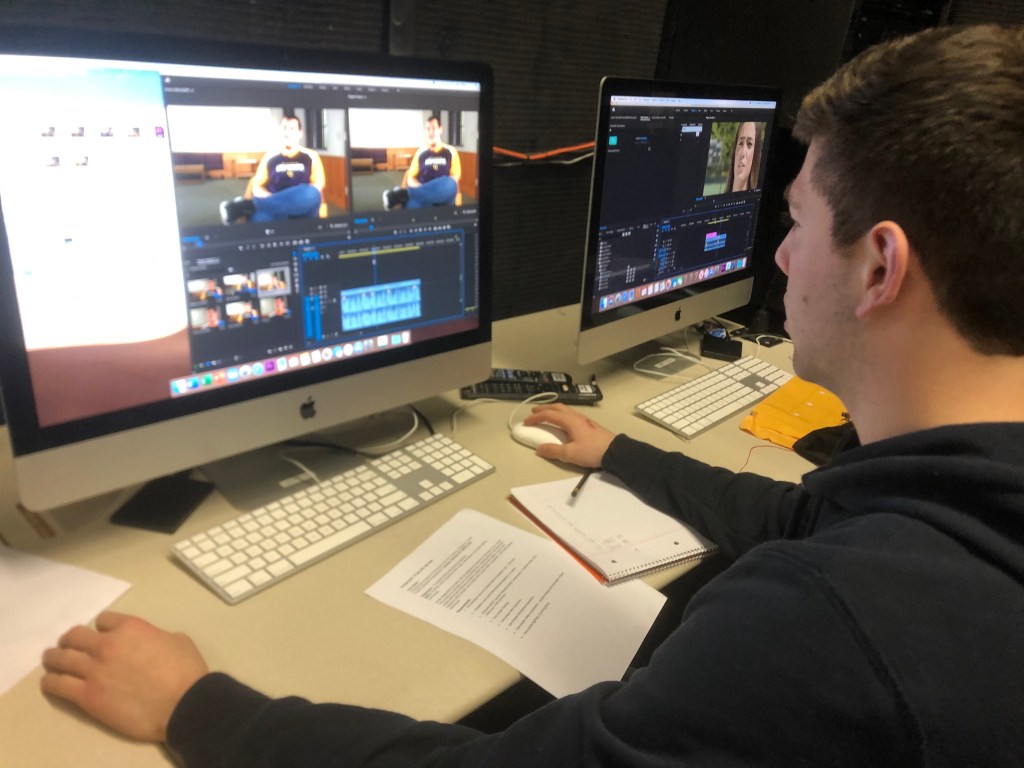
Post Production went very well, because we had so many clips we were able to find plenty of content to match up with our topic. The only problem we had was the enthusiasm in one of the clips. In the clip where Tomas talks about his number on the back of the jersey he isn’t excited about it which was frustrating for us during the editing process. That is the only thing I would’ve done differently, I would have asked him to reword his answer with more enthusiasm.
The assignment was to make three different clips consisting of three different shots each. Initially we wanted to do a scene with Gabby listening to music, but we didn’t have the correct shots. After that we went back to the drawing board and expanded on each of our ideas to make the shot longer. Originally we didn’t think each scene through but after this second brainstorming session we were ready to go. The biggest thing I have learned is get as much footage as possible and then figure out what to use.
Along the way, we encountered many difficulties. The first of which was our SD card knowledge, with neither of us having a lot of experience with the camera we put the footage on the wrong SD card. Originally, it wasn’t an issue until we realized that we didn’t know how to transfer the footage from the SD card to hard drive. We were able to remedy this pretty smoothly by renew the camera until class. This was where our second problem began. We didn’t have enough action in our different clips making it difficult to create a video from it. We went back out to reshoot on the next Friday but unfortunately it was raining. The next day we filmed our third scene that was supposed take place outside but unfortunately the sunlight made it difficult to film. This left us filming and editing on the next Monday and changing our third scene altogether.
What worked well was our group we had good communication and divided the work up evenly to allow each of us to gain camera experience as well as editing experience. Our only problem while editing was that some of our shots were dark so we had to figure out how we should use those clips. Our editing went well we used the razor tool to cut some of our clips in half and switch back and forth between shots.
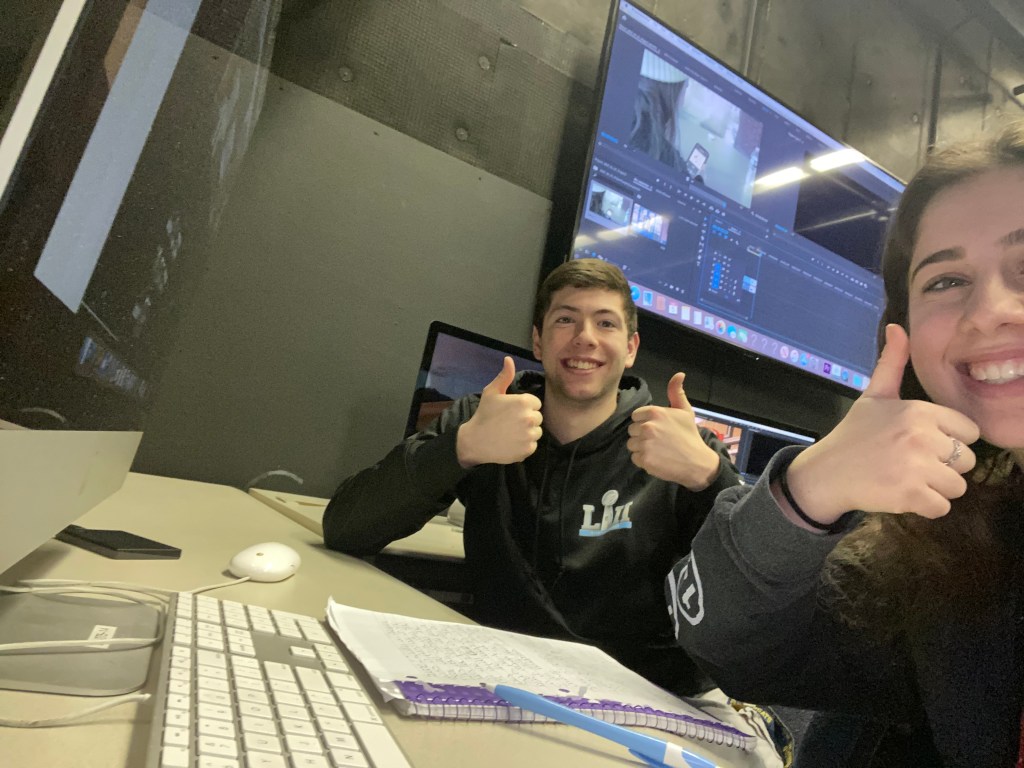
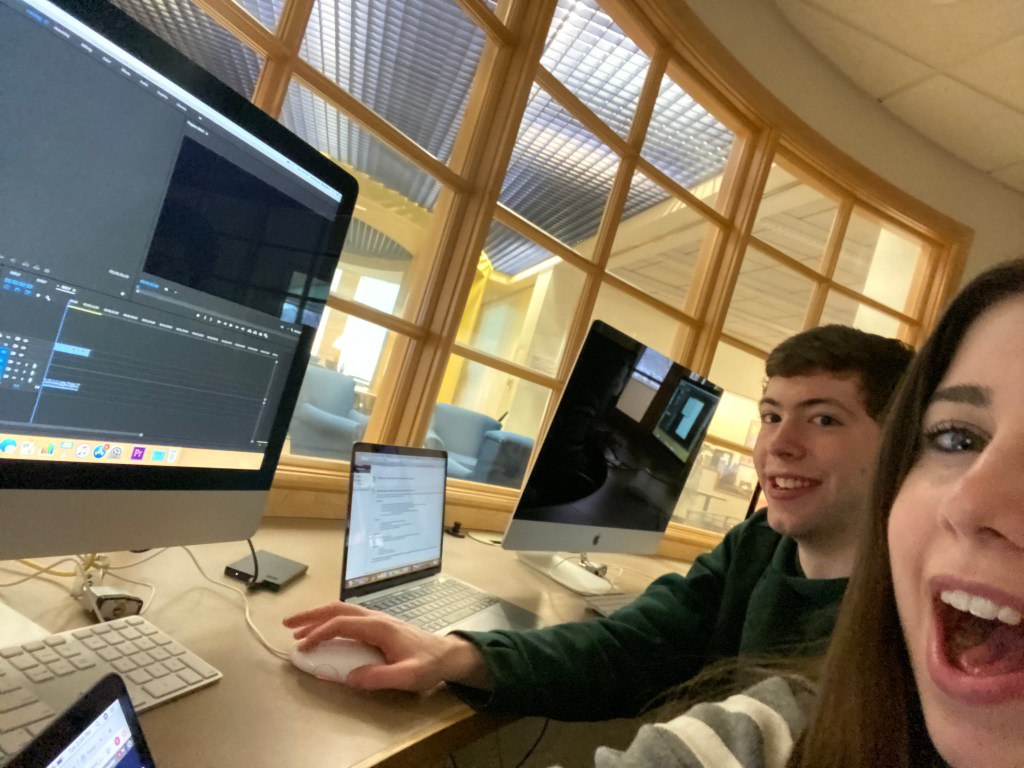
Hey, I’m Brendan Samson a 3+1 Journalism Major from Westminster, Massachusetts. My biggest interest is in sports, I love anything sports and that has led me on my career path of sports journalism. This stemmed from my love of reading feature articles on different athletes and eventually realizing that I want to write those articles. My biggest strength is that I am able to put a positive spin on any situation. This along with my background of playing competitive sports makes me great at teamwork. I can work well with anybody and find something in common with them. Another one of my strengths is that I am a good leader. During my senior year of high school I was a three sport captain, as well as receiving 3 sportmanship awards throughout my 4 years. Along with this, I was the captain of my intramural flag football team this fall. Another skill of mine is I can do work that requires great attention quickly and efficiently. Last summer, I have had a job maintaining my local baseball fields and also as a chef there. In each of these jobs I needed to make sure that my work is just right and in a timely manner. Finally I am a hard worker, this shows just through my last semester at Quinnipiac, even though we are given unexcused absences we are allowed to take I didn’t miss a single class all of last semester.
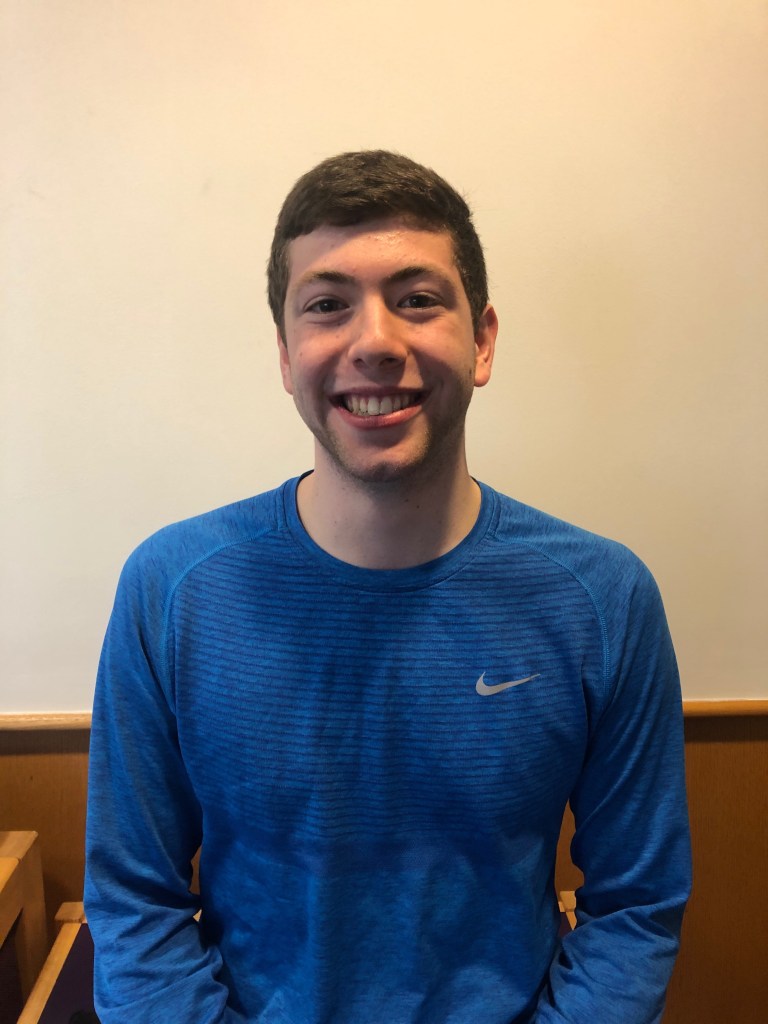
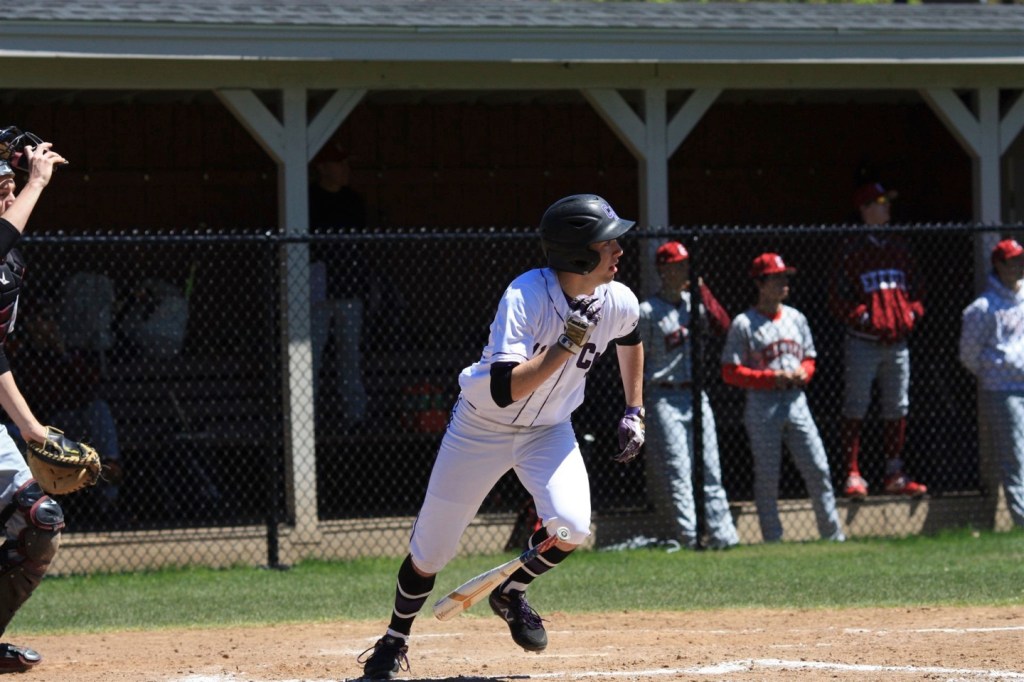
I’m Brendan Samson, a 3+1 Journalism major from Westminster, Massachusetts an hour and fifteen minutes outside of Boston. My main interests are sports, in high school I played baseball, football, and basketball, and soaked up any information I could about sports. Being from Massachusetts I am a huge Red Sox, Patriots, Bruins, and Celtics fan and am happy to be part of the city of champions. This has led me to two different clubs on campus. I write for the Quinnipiac Chronicle where I wrote an opinion article about Antonio Brown last semester. I also host a radio show about fantasy football for WQAQ along with three of my friends on Friday from 6-7pm. I also play intramural sports, in the fall nine of my friends and I made an intramural flag football team and I plan to play 10 v 10 softball in the spring. For me, my perfect career would involve me working on a major sports network, either hosting a show, commentating games, reporting, or even just writing articles. I love talking about anything sports and am excited to see where my interest and knowledge can take me. Through this class, I hope to improve my camera skills as well as my editing. My only experience with either of those skills is a film class I took my senior year of high school and I was more of an actor in the class than a camera man or editor. I hope to grow in all areas of filming and camera work, and hopefully become confident in making my own work. I also would like to become more comfortable in front of a camera, because ideally I will be in front of a camera in one of my jobs down the line.
This is an example post, originally published as part of Blogging University. Enroll in one of our ten programs, and start your blog right.
You’re going to publish a post today. Don’t worry about how your blog looks. Don’t worry if you haven’t given it a name yet, or you’re feeling overwhelmed. Just click the “New Post” button, and tell us why you’re here.
Why do this?
The post can be short or long, a personal intro to your life or a bloggy mission statement, a manifesto for the future or a simple outline of your the types of things you hope to publish.
To help you get started, here are a few questions:
You’re not locked into any of this; one of the wonderful things about blogs is how they constantly evolve as we learn, grow, and interact with one another — but it’s good to know where and why you started, and articulating your goals may just give you a few other post ideas.
Can’t think how to get started? Just write the first thing that pops into your head. Anne Lamott, author of a book on writing we love, says that you need to give yourself permission to write a “crappy first draft”. Anne makes a great point — just start writing, and worry about editing it later.
When you’re ready to publish, give your post three to five tags that describe your blog’s focus — writing, photography, fiction, parenting, food, cars, movies, sports, whatever. These tags will help others who care about your topics find you in the Reader. Make sure one of the tags is “zerotohero,” so other new bloggers can find you, too.

 Brendan Samson SPS 106 Blog